Photo by www.canada.com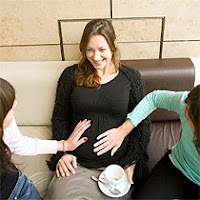 Just two cups of coffee a day doubles a pregnant woman's risk of miscarriage, new research shows.
In what is believed the clearest and strongest evidence yet linking caffeine to miscarriage, California researchers who followed more than 1,000 pregnant women found those who consumed 200 mg or more of caffeine daily -- the equivalent of two cups of regular coffee, or five, 12-ounce cans of caffeinated pop -- had twice the risk of miscarriage as women who avoided caffeine.
Even women who consumed less that 200 mg of caffeine a day had a 42% increased risk of losing the pregnancy.
"We really don't know much about the risk factors for miscarriage other than a few commonly known ones, like age, chromosomal stuff and smoking," says lead investigator
Dr. De-Kun Li, a reproductive and perinatal epidemiologist at the Kaiser Permanente Division of Research in Oakland, Calif.
Past studies have shown a link between caffeine and miscarriage, but there has been a complicating factor: Women who get morning sickness often give up coffee. And these women are less likely to have a miscarriage in the first place, as morning sickness is one sign of a healthy pregnancy.
One theory is that morning sickness, which can actually occur at any time of the day, is nature's way of protecting the unborn baby from toxins and-chemicals that can harm fetal development.
Dr. Li's study is the first to "control" for morning sickness, meaning scientists took it into account before tallying up the final results. About 15% of "clinically recognized" pregnancies end in miscarriage.
Many women miscarry before they know they are pregnant. The causes for most miscarriages are not wholly understand and many suspected risk factors remain controversial or unproven.
Caffeine is among the most frequently ingested pharmacologically active substances in the world, according to the new study, published today in the online issue of the American Journal of Obstetrics and Gynecology.
Caffeine readily crosses the placental barrier, so it can go straight to the fetus. The earlier the exposure, the less likely the fetus is to metabolize it because of an under-developed metabolic system. As well, caffeine, particularly at high doses, makes blood vessels contract.
If that contraction is severe enough, it may reduce blood flow to the placenta. "That can have detrimental effects to the fetus as well," Dr. Li said.
His team recruited 1,063 San Francisco women from October of 1996 to October of 1998. Women were recruited early in their pregnancy -- as early as four weeks gestation -- "so we were able to capture a lot of miscarriages that most studies missed," Dr. Li said.
The expectant mothers were asked about their caffeine consumption and their changing pattern of drinking. They were also asked about nausea and vomiting and other factors that might influence how much caffeine they consumed.
Overall, 172 women, or 16%, miscarried. The higher the intake of caffeine from any source -- coffee, tea, caffeine-containing soft drinks or hot chocolate -- the greater the risk of early or late miscarriage.Compared with non-users, women who consumed 0-200 mg of caffeine daily had an increased risk of miscarriage (15% versus 12%). The risk was higher (25%) in women who consumed more than 200 mg of caffeine daily.
The researchers estimated the amount of caffeine intake in beverages using the following conversion: For every 150 millilitres of beverage, 100 mg for caffeinated coffee, two mg for decaffeinated coffee, 39 mg for caffeinated tea, 15 mg for caffeinated soda and two mg for hot chocolate.
Source: http://www.canada.com/topics/lifestyle/parenting/story.html?id=678a6089-aeb6-438b-944c-8d4482606be6 Recent Keyword Searches: pcos ivf miscarriage, mom miscarriage poems, natural pregnancy at 42 after two miscarriages, poem for moms who miscarried, herbal support for pregnancy and to avoid miscarriage, false unicorn root miscarriage recipes, poem for infant loss, b6 to prevent miscarriage, allergy miscarriage
From too much caffeine to faulty chromosomes, the list of things that can contribute to a lost pregnancy is long. What you need to know about the many risk factors.
Each year, 4 million parents welcome new babies. More than 1 million others lose theirs before they're born. Why? It's the question of the month, after a headline-grabbing study said women who reported consuming more than 200 milligrams of caffeine a day doubled their risk of miscarriage -- from the 12 percent among non-using participants to 25 percent. (A 12-ounce "tall" Starbucks coffee contains 260mg.) Latte lovers flooded doctors' offices with anguished queries. The hysteria is "like an epidemic," says Yale University Ob-Gyn Mary Jane Minkin, author of "The Yale Guide to Women's Reproductive Health."
Caffeine, of course, isn't the only culprit. The list of factors that plays a role in miscarriage is long, and not all of them can be controlled. Or understood. More than half of all miscarriages are caused by chromosomal abnormalities. "It's nature's way of saying, 'this isn't working, so we're going to let it go'," says Duke University Ob-Gyn Susann Clifford. Random chromosomal error causes 70 percent of pregnancies that end before six weeks of gestation, 50 percent of pregnancies that stop between six and 10 weeks and only 5 percent of pregnancies that end after 10 weeks.
Women cannot do much about some risk factors, such as previous miscarriages and advanced maternal age. "You can't change your age, and you can't change your history. It's a frustrating business," says Mount Sinai School of Medicine epidemiologist David Savitz. Older women are simply more likely to conceive embryos with chromosomal abnormalities, such as Down syndrome. In the general population, the risk of miscarriage after six weeks gestation is 15 percent. At age 35, it's 25 percent and at age 40 it's 42 percent.
There are steps that women of all ages can take to lessen other potential risks--even before they conceive. "Good preconception care is probably your best bet," says Dr. Uma Reddy, a medical officer for the National Institute of Child Health and Development. "By the time you come and see your Ob at 11 weeks, it's already too late." Before and after conception, take prenatal vitamins (which include folic acid), don't smoke, avoid second-hand smoke and toxic chemicals, and maintain an ideal body weight. Obesity increases the risk of miscarriage (and birth defects) and is emerging as a significant risk factor for stillbirth, says Reddy. Eating undercooked meat can increase exposure to the bacteria listeria, to E. coli and to the toxoplasma parasite. Cleaning the litter box of an outdoor cat, who may eat an infected bird or rodent, also increases the risk of toxoplasmosis.
Staying calm is important, as well: a British study last year added to the mounting evidence that stress may increase miscarriage risk. (This is the kind of advice that drives already-anxious women crazy, unfortunately.) Avoid alcohol and illicit drugs, such as marijuana, cocaine and heroin. And use acetaminophen (Tylenol) instead of ibuprofen (Advil), which can decrease the amount of amniotic fluid around the baby, says the NICHD's Reddy. To be safe, avoid sushi and limit consumption of fish high in mercury levels, such as canned tuna, says Dr. Diane Ashton, deputy medical director of the March of Dimes. And avoid soft cheeses like brie and gorgonzola, which may contain the bacteria listeria. Limit exposure to chemicals such as home pesticides, mercury and gasoline--but be realistic. "We're not going to recommend that pregnant women never fill their car," says Ashton. Make sure you're vaccinated against chicken pox and rubella (before trying to conceive) since anything that can cause birth defects may also cause miscarriage. And, to repeat the latest news, don't overdo caffeine, which crosses the placental barrier and increases blood pressure and heart rate.
Other potential risk factors require further study. Hot tubs and microwaves ovens, for example, have not received much research attention. Dr. De-Kun Li, the lead author on the caffeine study, has examined them, however, and he tells women to stand at least five feet from a microwave oven, and to stay out of hot tubs since they may raise core body temperature. (In a hot tub, a woman can't sweat to cool off.)
After a woman has miscarried two or more times, doctors may conduct tests of the woman and her partner (or of the miscarriage tissue) to detect chromosomal problems. They may also look for infection of the uterus. And blood tests can detect diabetes, autoimmune disease and hormone imbalance. About one in five women with recurrent miscarriage suffers from a clotting problem that can interfere with implantation; doctors can use blood thinners as treatment.
Many women who've suffered miscarriages think women should ask for a medical workup after a single loss. Darci Klein, founder of PreventPregnancyLoss.org and author of "To Full Term: A Mother's Triumph Over Miscarriage," lost three pregnancies (including a set of twins) before finding out through a blood test that she had a condition that resulted in abnormal clotting. She took a blood thinner--and delivered a healthy son.
"The biggest cause of loss is that women aren't tested after suspicious miscarriage. That leaves women like me to lose pregnancy after pregnancy. Some of them stop trying." She considers factors like caffeine and cat litter "such a small part" of the miscarriage issue. "There may be a few people who cleaned a cat box every year who ended up having problems with their pregnancies," she says. "There are hundreds of thousands of women losing pregnancies to undiagnosed but treatable disorders."
Carrying twins or triplets increases the risk of miscarriage during that pregnancy. So do assisted reproductive technologies, such as in vitro fertilization. With follicle-stimulating drugs called gonadotropins, we may be pushing eggs that are sitting dormant in the ovary to mature," says Dr. Mary Stephenson, director of the recurrent pregnancy loss program at the University of Chicago's Medical Center. "In IVF, we make more than one egg a cycle. Maybe those eggs, we just should have left them alone." Prenatal testing for chromosomal disorders like Down syndrome can also causes miscarriage -- one in 300 procedures for amniocentesis and one in 100 for chorionic villus sampling (CVS).
Fortunately, there's more to avoiding miscarriage than living a life of, well, avoidance. Enjoy exercise and sex, which research shows do not increase the risk of miscarriage. The usual advice for women who've miscarried is to try again. "If you keep trying, the odds are in your favor," says Minkin. Try not to give in to guilt and blame. Sadly, pregnancy loss is incredibly common -- and often mysterious. Says Kaiser Permanente pernatologist David Walton: "Women should consider one miscarriage just a normal event that happens during their reproductive life."
Source: http://www.newsweek.com/id/104816 Recent Keyword Searches: pregnancy after miscarriage, miscarriage over 45, when should i try again after three miscarriages, pregnancy after two miscarriages real life stories, reasons for miscarrying, an my normal exercise routine cause me to miscarry, greiving over miscarriage, misdiagnosed miscarriage, miscarriage for older moms
MONDAY, Jan. 21 (HealthDay News) -- Caffeine consumption by pregnant women can increase the risk of miscarriage, a new study reports.
And, it doesn't matter if the caffeine comes from coffee, tea, soda or hot chocolate. What does matter is the amount -- the study found that when women drink more than 200 milligrams of caffeine daily, the risk of miscarriage increases twofold.
"What we found was that if women have heavy caffeine intake -- greater than 200 milligrams a day -- they have double the risk of miscarriage than women that don't have any caffeine," said one of the study's authors, Dr. De-Kun Li, a reproductive and perinatal epidemiologist in the division of research at Kaiser Permanente in Oakland, Calif.
Results of the study were published online in the January issue of the American Journal of Obstetrics and Gynecology.
Caffeine, the most frequently consumed drug in the world, crosses the placental barrier and reaches the developing fetus, according to the study. While previous studies have found an association between caffeine intake and miscarriage, it hadn't been clear whether the problem was due to the caffeine or another substance in coffee, or if it had something to do with non-coffee drinkers' lifestyles -- perhaps people who didn't drink coffee ate more fruits and vegetables, for example.
For the new study, the researchers looked at 1,063 women from the Kaiser Permanente Medical Care Program in San Francisco; they were interviewed at an average of 10 weeks' gestation. During the study period, 16 percent of the women -- 172 -- had miscarriages.
The researchers found that 25 percent of the women who miscarried reported consuming no caffeine during their pregnancy. Another 60 percent said they had up to 200 milligrams of caffeine daily, and 15 percent regularly consumed more than 200 milligrams of caffeine each day.
In addition to asking about caffeine intake, the researchers also assessed the other known risk factors for miscarriage, such as smoking, a history of previous miscarriage, alcohol use and more. The researchers also compensated for nausea and vomiting during pregnancy.
"If you have a low risk of miscarriage, the effect of caffeine tends to show more," said Li.
Li said that even among women who drank less than 200 milligrams of caffeine a day, the study found a 40 percent increased risk of miscarriage, but this finding didn't reach the level of statistical significance.
"Women shouldn't drink more than two regular cups of coffee a day, and hopefully they stop drinking totally for at least the first three months. It's not a permanent stop. If they really have to drink, limit the amount to one or two cups -- a regular cup is about seven and half ounces," Li said.
But, not every doctor is convinced that there's a direct cause-and-effect relationship between caffeine and miscarriage.
"The problem with this study is that when people miscarry, a large percentage of those miscarriages are due to genetic abnormalities, and the researchers didn't say whether these were normal or abnormal fetuses," said Dr. Laura Corio, an obstetrician and gynecologist at Mount Sinai Medical Center in New York City.
"Women are always worrying and wondering, 'What did I do?' Before we say a woman drank too much caffeine and that's why she had a miscarriage, let's see if it was an abnormal or normal pregnancy, said Corio.
"I think about 60 to 80 percent of miscarriages are due to genetic abnormalities," she added.
That said, however, Corio does advise her pregnant patients to limit caffeine consumption. "Women have a responsibility to the fetus -- no cigarettes, no alcohol and just one cup of coffee a day," she said, noting that many store-bought cups of coffee contain far too much caffeine, so a woman has to be aware of how much caffeine is in her favorite coffee.
"Have less than 200 milligrams a day," no matter what the source -- coffee, tea, cola, chocolate, etcetera, Corio advised. She said caffeine has also been linked to low birth weights and smaller head circumferences.
Li also advised limiting caffeine to less than 200 milligrams a day, especially in the early months of pregnancy and in the preconception period.
More information
To learn more about caffeine and pregnancy, visit the American Pregnancy Association.
SOURCES: De-Kun Li, M.D., Ph.D., reproductive and perinatal epidemiologist, division of research, Kaiser Permanente, Oakland, Calif.; Laura Corio, M.D., obstetrician/gynecologist, Mount Sinai Medical Center, New York City; January 2008, American Journal of Obstetrics and Gynecology, online
Source: http://www.healthday.com/Article.asp?AID=611863Recent Keyword Searches: i need to know about misscarriages and how to prevent it, herbal remedies miscarriage, miscarriage causes loss of job, pregnancy preventing miscarriage eating study 2008, misdiagnosed miscarriage, miscarrage stories, miscarriage over 45 donor eggs, avoiding miscarriage ivf over 45, multiple miscarriages after full term pregnancy, how to get pregnant and prevent miscarriage at 44
NEW YORK (Reuters Health) - Drinking moderate amounts of coffee during pregnancy won't increase a woman's likelihood of miscarrying, new research shows.
"Based on what we've seen, it's not a cause for great concern," Dr. David A. Savitz of Mount Sinai School of Medicine in New York City, the study's first author, told Reuters Health, noting that past research has had similarly "reassuring" results.
But because women in the study consumed a relatively small amount of caffeine -- the equivalent of less than two cups of coffee daily in early pregnancy and less later on -- the study can't answer the question of whether consuming more might be harmful, he said.
Savitz's study is unique in that some women reported their caffeine consumption before pregnancy, others reported it within the first 8 to 12 weeks, he noted. "There's an advantage in asking very early, when people can recall more accurately."
He and his team followed 2,407 pregnant women, 258 of whom miscarried. All of the women reported their caffeine consumption before they became pregnant; 4 weeks after their last menstrual period; and at the time of the interview.
Most women in the study who drank coffee or other caffeinated beverages consumed about 350 milligrams of caffeine daily before they became pregnant and in very early pregnancy, equivalent to 1.7 7-ounce cups of brewed coffee a day. At the time of the interview, their average caffeine intake had fallen to 200 milligrams.
At each of the three time points assessed, there was no statistically significant relationship between the amount of caffeine a woman consumed and her risk of miscarriage.
"These data provide evidence to suggest that, within the lower range examined, caffeine intake is not associated with risk of miscarriage," Savitz and his colleagues conclude.
SOURCE: Epidemiology, January 2008.
http://uk.reuters.com/article/healthNews/idUKHAR96754420080109
Recent Keyword Searches: trisomy 18, 50% miscarriage rate over 40, missdiagnosed miscarriage, statistics for miscarriage at 48, what are the odds of a miscarriage again if you get pregnant a month after you just had one?, baby loss multiple stories, waiting to miscarry naturally, can you exercise after miscarriage, preventing miscarriage over 45, recurrent miscarriages blog
There are many alternative medicine health care providers who think that drinking herbal teas during pregnancy is one way of providing optimal support to the health of a pregnant mother. However, there are studies that show green tea and pregnancy cannot really go together. The divide is causing some mainstream confusion about the real effects of drinking green tea during pregnancy period.
Teas are often the source of additional nutrients like iron, calcium and magnesium. For pregnant women, added nutrients will do wonders for the stage they are going through. The problem is there haven’t been enough studies to corroborate the safety of pregnant women who consume teas. And the few studies conducted on the safety of green tea for pregnant women are also too few for experts to make a conclusive stand. On the other hand, there are studies claiming that green tea and pregnancy is safe as long as the beverage is taken in moderation.
Experts advise that green tea and pregnancy is an acceptable combination as long as the pregnant women curb their intake of green tea to no more than 5 cups daily during the stage of pregnancy. This restriction is based on study results that show that although caffeine may not produce undesirable results and cause harm to the developing baby, there are still significant evidences that link slower fetal growth to daily consumption of 400 milligrams or more of caffeine, which can be translated to 6 or more cups of tea. Taking in too much caffeine may also bring on higher risk of late first of second trimester miscarriage.
The combination of green tea and pregnancy is not also viewed as beneficial for the reason that the effectiveness of folic acid may be affected. Folic acid is important in the prevention of neural tube defects in the first month after conception. A recent study highlighted the negative effects of green tea on folic acid. The study reported that a major compound in green tea called EGCG can cause the inactivation of an enzyme in the cancer cell called dihydrofolate reductase (DHFR), which is important for folic acid utilization.
When the EGCG in green tea inactivates the DHFR in the cancer cell, the fetus will be unable to receive the complete folic acid benefits that will help prevent it from developing neural tube birth defects. It is also reported that even though the pregnant mother will continuously take folic acid supplements and eat greens rich in folate, there will still be an effect, albeit a slight one. However, it has been pointed out that the data for the EGCG-DHFR study is rather weak, so there hasn’t been enough conclusive evidence to prove that green tea indeed has adverse effects on folic acid.
With all these negative effects of green tea and pregnancy, some professionals still manage to stay steadfast to the widely recognized health benefits of green tea. According to them, drinking green tea while pregnant is safe so long as these women observe caution by drinking the beverage moderately. To stay on the safe side, experts recommend that approximately 2 or 4 cups of green tea a day would likely be a sensible dose. But the best advice when it comes to green tea and pregnancy would be to discuss the issue with a doctor first.
Article Tags: Green Tea, Pregnancy And Green Tea, Green Tea Health Benefit, Health Benefit Of Green Tea
About the Author:
Patricia Hammond is a green tea enthusiast. Get her FREE 7-Day GREEN TEA eCourse here or visit her site at www.YourHealthCenter.info for more health tips on weight loss, sleeping disorders and others.
Source: Free Online Articles from www.ArticlesBase.com
With more than 80 percent of Americans consuming it in some form or another every day, caffeine is easily the nation’s most popular drug, far ahead of nicotine and alcohol. So when studies first suggested decades ago that caffeine could increase the risk of miscarriage, it raised alarm. Why exactly it might pose such a risk remains unclear, but numerous studies in recent years have investigated the link.
One of the more unnerving studies was published in The New England Journal of Medicine in 2000. It looked at more than 1,000 pregnant Swedish women and found that those who drank the equivalent of one to three cups of coffee a day had a 30 percent increased risk of miscarriage, while those who had the equivalent of at least five cups had more than double the risk.
But a majority of studies have suggested that any risk might apply only to high levels of caffeine intake. One study carried out by the National Institutes of Health in 1999 looked closely at the blood levels of caffeine in tens of thousands of pregnant women and found that those who consumed the equivalent of more than five cups of coffee a day did have an increased risk, while those who drank one or two cups did not. Other studies have had similar findings.
According to the Department of Health and Human Services, there is now general agreement that low caffeine intake during pregnancy — about 150 milligrams a day, or roughly 1.5 cups of coffee — is safe.
THE BOTTOM LINE
Low caffeine intake during pregnancy appears to be safe, while the risk of high intake is unclear.
Source: http://www.nytimes.com/2007/06/05/health/05real.html?ref=science
 Just two cups of coffee a day doubles a pregnant woman's risk of miscarriage, new research shows.
